.svg)





Thousands of pages, tricky questions, tight deadlines
The examination process for a large scale solar farm lasts over six months - an Examining Authority poses written questions and interested parties submit their opinions, both requiring fully evidenced responses by strict deadlines. Low Carbon's applications stack up to thousands of pages ranging from environmental statements, to technical assessments, maps, figures, and diagrams. When a question comes in about landscape impact or biodiversity net gain, the team has to locate the exact evidence across this mountain of documentation, often under intense time pressure, to then draft a response.
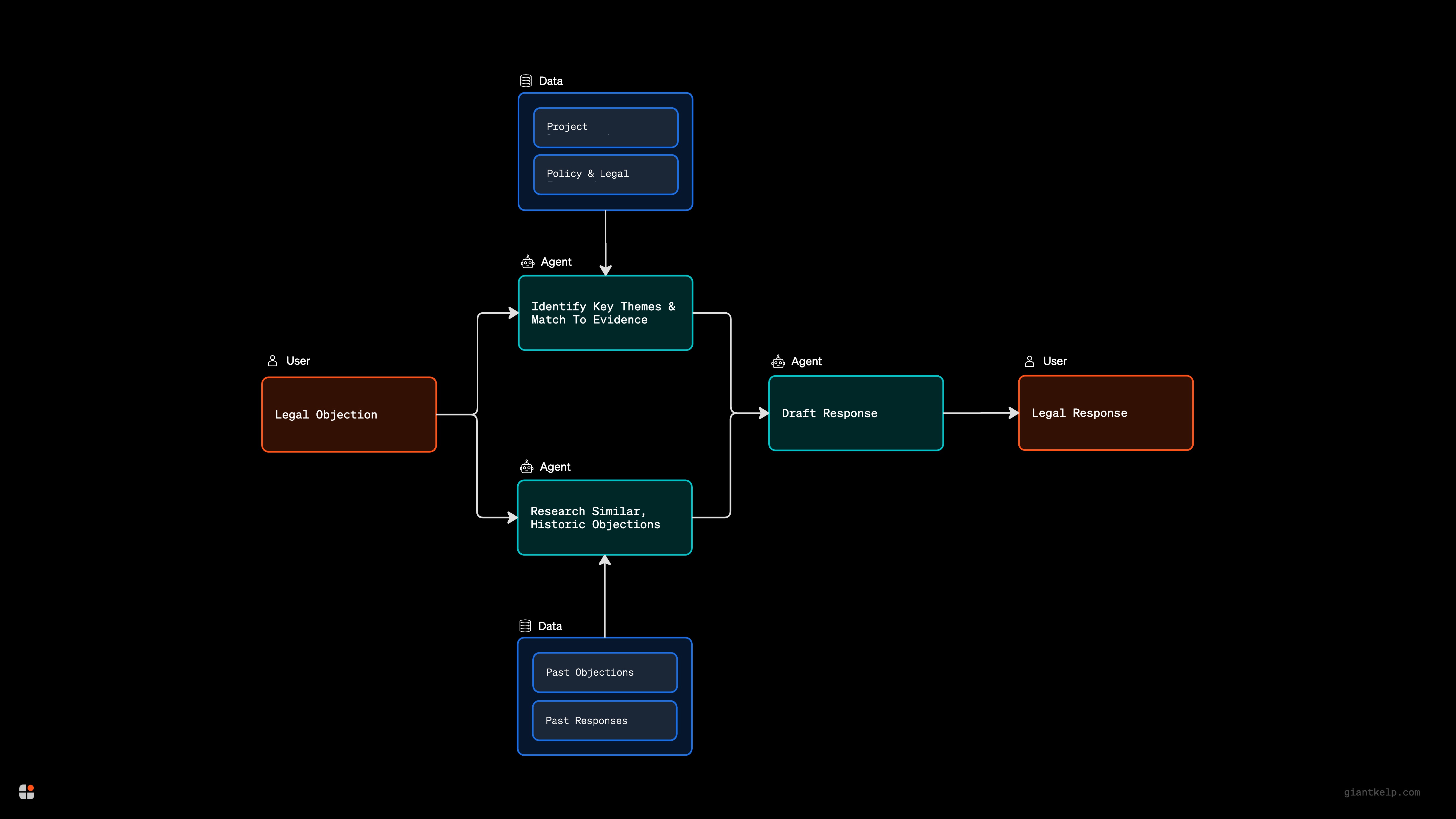
An AI system that builds responses from the evidence up
We built a pipeline that handles each request in one go. First, we processed all the project documentation - extracting text, describing visual information like maps and diagrams, and organising everything so it can be searched intelligently. When a question comes in, the system breaks it into its component parts, works out what evidence is needed for each and searches across the documentation to find it. It also draws on a database of past solar farm examinations to match the new question with old, rubber stamped answers to similar questions. All of this feeds into an intelligent legal agent, prompted with strict guidance on tone, language and citation systems, which drafts a final response for the team to review.
From a document scramble to response refinement
The team can spend their time reviewing and improving AI-drafted responses rather than hunting through documents for nuggets of evidence that may not even be there. Questions that used to take hours of searching get a first draft in minutes, complete with citations and flagged gaps. And with every examination that passes, the database of past responses grows, improving the expertise available and making each response better than the last.
.png)